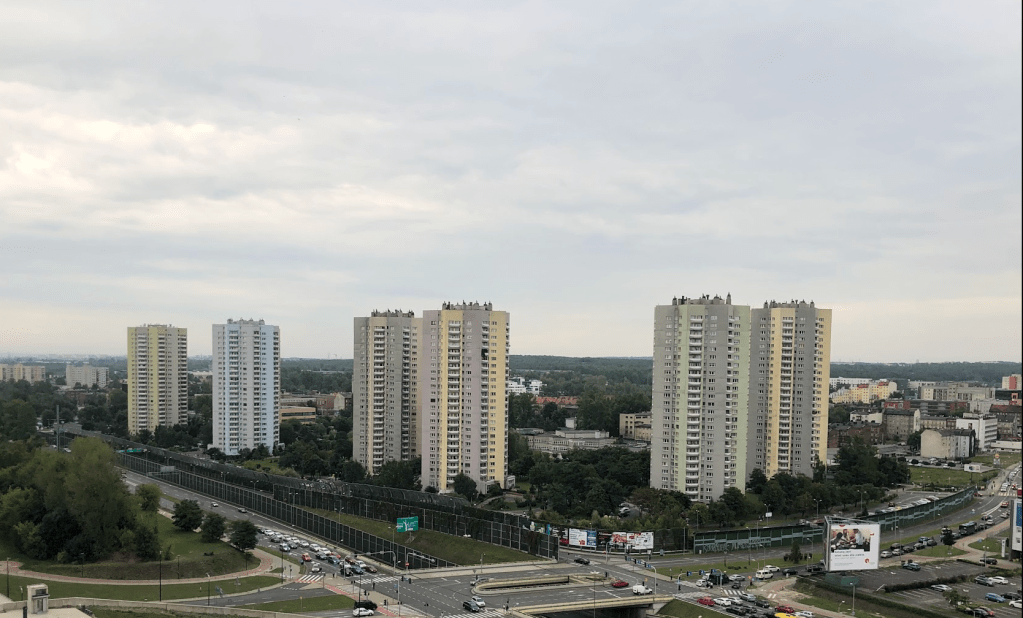
Bloki in Katowice. Image by Anja Wedberg
Poland has a massive hip hop scene that has been going strong since the 1990s. Find out who Poland’s main rappers are and listen to the playlist with key hip hop tunes from each decade.
Quick links – jump straight to:
- Getting started with Polish hip hop
- The playlist: Polish hip hop in a nutshell
- The 1990s: The pioneers
- The 2000s: Refined production and women on the scene
- The 2010s: Streaming and genre cross-over projects
- The 2020s: Influencers for a new generation
- What are your favourite Polish rappers?
- Sources
- Follow Sing Polish
I started looking for hip hop and rappers as a complement to my Polish language classes. Not surprisingly, Polish hip hop lyrics were way beyond my beginner level.
The thing is, I liked listening to it anyway, even when most of it went over my head and I just snapped up a word here or a phrase there. Talent broni się w każdym języku (talent speaks for itself in any language).
I bet you can appreciate it too, whether you speak Polish or not. All you need is an interest in music and in Poland. Polish hip hop is extra interesting for learners as it often provides an alternative glimpse of the country (beyond language textbooks and tourist brochures).
Getting started with Polish hip hop
Polish hip hop emerged after the fall of communism in 1989. The country started its transition from a Soviet satellite state with restricted freedom of expression to a capitalist democracy. Free movement of goods and trade meant shops started filling up with everything from Coca-Cola to American hamburgers. The first McDonald’s in Poland opened in Warsaw in 1992.
But it was hardly a painless and straightforward transition. Poland was a post-communist construction site, and the early 1990s presented mass unemployment, widespread criminality and an uncertain future.
During this time, two very different music genres established themselves in Poland:
On the one hand, the rural areas and country towns embraced the cheerful party tunes of Disco Polo. On the other hand, many urban youths who grew up in the so-called bloki – the typical grey, concrete housing estates in the main cities – found their voice in hip hop and rap. And not always with the approval of older generations. In the beginning, hip hop was very much an underground scene, and apparently some schools even prohibited baggy trousers (source: Rap Story podcast).
Rap became the voice of a generation – inspired by American hip hop, of course, but also digging deep into Polish culture. Expect samples from Public Enemy and Curtis Mayfield side by side with Cieszław Niemen and Chopin.
The playlist: Polish hip hop in a nutshell
Check out the playlist on YouTube or Spotify. You’ll find tracks by everyone mentioned in this article plus many more. I had to limit the article somehow or else it would never get done – let me know in the comments which artists you would add to the article!
The 1990s: The pioneers
Polish hip hop didn’t start with a Big Bang but rather with a series of explosions. Several groundbreaking rappers appeared around the same time in different places.
In Kielce, Katowice, Warsaw (especially the Ursynów district), and Poznań, young lads grabbed the opportunity to express themselves freely. During a time when capitalism made promises that seemed to be fulfilled only for some parts of the population, they had a lot to say.
Did they have anything in common? There’s a lot of biting social commentary amidst unemployment and criminality. But there was also a strong sense of neighbourhood pride and authenticity. The result is gritty with lots of slang and swearing, but it’s often also refreshingly playful.
There’s something about Polish that lends itself to rapping – maybe because it’s such a flexible language? It has a rich lexicon for sure and because of the grammar cases, I often feel like I have to learn the same word 7 times. This provides a lot of options for art forms based on words.
Liroy and Wzgórze Ya-Pa 3 (Kielce)
In the industrial town of Kielce, Liroy (sometimes called the “godfather of Polish hip hop”) became one of the first rappers to gain nationwide popularity. His debut album East On Da Mic was released (under the name PM Cool Lee) on cassette already in 1992, making him one of the first established hip hop artists in Poland. The follow-up Alboom came in 1995 and was a massive hit.
Also from Kielce is the influential trio Wzgórze Ya-Pa 3, inspired by Liroy and Cypress Hill (“wzgórze” means hill). Liroy took them under his wing and they toured and recorded together under the name Liroy and the Hooligans. Later, they went their separate ways, and Wzgórze Ya-Pa 3 made a name for themselves.
Fun fact about Liroy: He later became a right-wing member of parliament and supported Paweł Kukiz’ presidential campaign in 2015.
Kaliber 44 and Paktofonia (Katowice)
Meanwhile, three lads in Katowice started experimenting with their own brand of hip hop. Brothers Joka and Abradab plus Magik teamed up to form Kaliber 44. Out came something they named “psycho rap”.
Their first album Księga Tajemnicza: Prolog (“The mysterious book: Prologue”) was released in 1996. It’s a weird and wonderful record that includes classics like “Usłysz mój głos” (“Hear my voice”) and “Plus i minus”. It quickly sold 100,000 copies and even became the second-best-selling Polish hip-hop album of the 1990s (first place: Liroy’s Alboom) (source: Wikipedia.pl).
The second album, 63 minuty dookoła świata (“63 minutes around the world”) followed in 1998, selling gold. Around this time, Magik left the group to form Paktofonia (more about that below).
Joka and Abradab continued as a duo. They released a third album called 3.44 before Joka decided to leave the limelight and travel to the US. Since then, he appeared occasionally in various collaborations but sadly passed away in 2025. 😭 Abradab has released some excellent stuff, both solo and in collaborations with others.
Molesta Ewenement (Warsaw)
Around the same time, there was a lot of activity in Ursynów, Warsaw. The district is often described as the unofficial capital of Polish hip-hop because so many influential rappers lived within a few blocks of each other.
One of those acts was Molesta Ewenement, an uncompromising gang rapping about the grim but bonding reality of life in the grey housing estates.
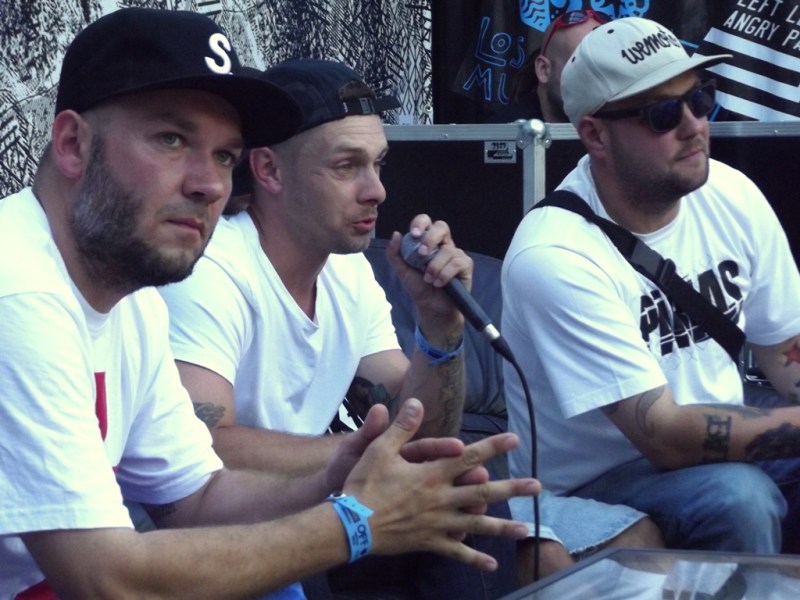
The two original members were Vienio and Włodi, but a bunch of other people got involved over time. The Molesta collective was uncompromising and real – not about fame or sales. They released their debut album Skandal in 1998.
Fun fact about Vienio: Since the 1990s, Vienio has not just continued within music, but is also a massive vegetarian foodie who has hosted cooking shows like Ślinotok and appeared in Top Chef Stars.
Sokół (Warsaw)
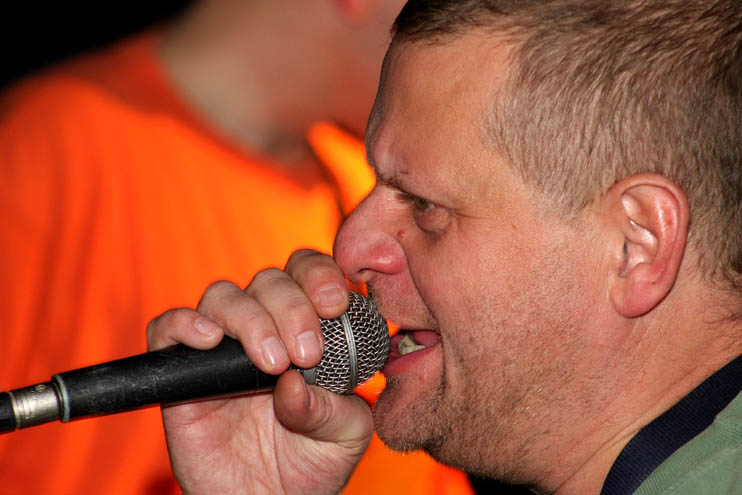
Sokół is one of Poland’s early rappers who not just keeps going decade after decade, but also keeps evolving through various collaborations.
Whether as a solo artist or as part of a group (WWO, ZIP Skład, TPWC, and a collaboration with his then-partner Marysią Starostą), he’s respected for his sharp observations of Polish society, delivered in his characteristic gravelly voice.
In 2025, he was one of the judges on Rhythm + Flow Poland, a talent show for rappers (available on Netflix).
Peja and Slums Attack (Poznań)
Representing Poznań, Peja is known for his grim storytelling. In the Netflix series All that Rap, he explains that he grew up in such a violent environment that violence was the only way he knew how to communicate.
Peja turned out to be an incredibly talented rapper. His first album Slums Attack from 1996 gives a fascinating glimpse into the darkest corners of Polish society in the 90s. Think drug addicts, gangsters, and prostitutes who sell their bodies for a bottle of vodka in neighbourhoods where “stolen cars never go out of fashion”.
What was the first Polish rap album?
The earliest Polish hip hop productions were released on cassette rather than vinyl. According to the Netflix series All that Rap, the first professionally produced Polish rap album was Trials X’s Prawda Cel Przesłanie (Truth Purpose Message) in 1995.
Another name often mentioned in this context is Liroy, often called “the godfather of hip hop”, and his album East On Da Mic.
But funnily enough, an album from 1991 often pops up in conversations about the first Polish rap album: Kazik Staszewski’s Spalam się! Yes, Kazik as in the singer of the beloved rock/punk group Kult. It’s not as weird as it sounds – as a fan of American hip hop, he started experimenting with sampling and singing techniques that resemble rapping, even if he didn’t consider himself a rapper. Spalam się is not available on Spotify but you can check out the full album on YouTube.
Were there any Polish lady rappers in the 90s?
As far as I know, there weren’t many raperki around in 1990s Poland – at this time, hip hop was very much a lads’ club. If girls were invited, it was usually to look sexy in a teledysk (music video) or as refreniary (chorus girls).
There is a “godmother of Polish hip hop,” but she’s a journalist rather than a rapper: Bogna Świątkowska, who had a radio show dedicated to hip hop together with Sebastian Imbierowicz (aka DJ 600V) as early as 1993.
One of Poland’s early female rappers, and the first woman to release a full-length solo hip hop album, was WdoWa in 2005 (see more below).
The 2000s: Refined production and women on the scene
By the 2000s, hip hop was already an established force in the Polish music industry. Production became more refined, giving many albums from this decade a more mature sound with a polished and less raw vibe.
Paktofonia (Katowice)
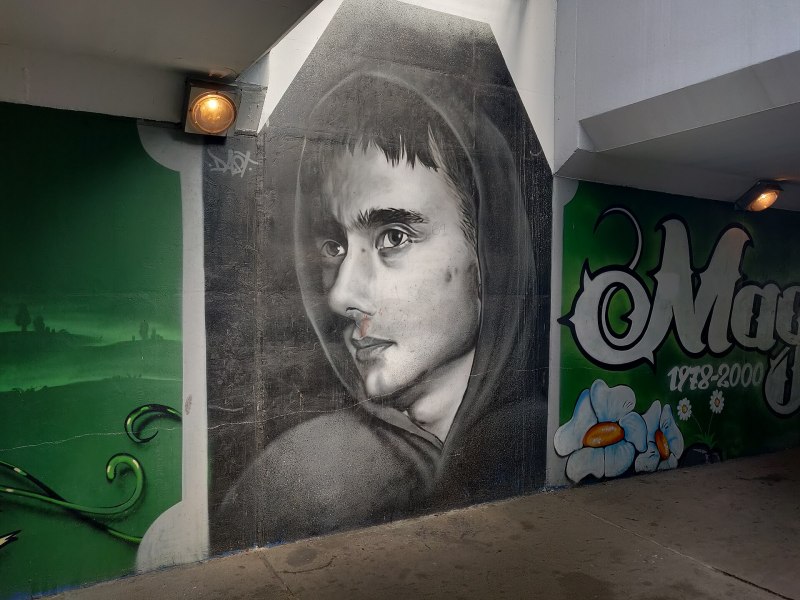
The 2000s got off to a flying start with the massive success of Paktofonia, the band Magik founded after leaving Kaliber 44. Their first album Kinematografia dropped in 2000 and is still one of the most respected records in the country’s history.
Paktofonia tracks like “Jestem Bogiem” (I am God) and “Chwile Ulotne” (Fleeting moments) became the anthems of a generation. Structured like a film in 16 scenes, Kinematografia is full of honest reflections around life and death, fears and hopes.
Like several of the early hip hop legends, the talented Magik kept a low profile and avoided the media – they were creators and not celebrities. Unlike many others though, he had a particularly troubled mind. 8 days after the release of Kinematografia, he tragically took his life 😭
If you want to know more about Paktofonia, the film Jesteś Bogiem (You are God) is a good starting point – available on Netflix at the time of writing this article.
Several new hip hop heavyweights would soon appear on the scene.
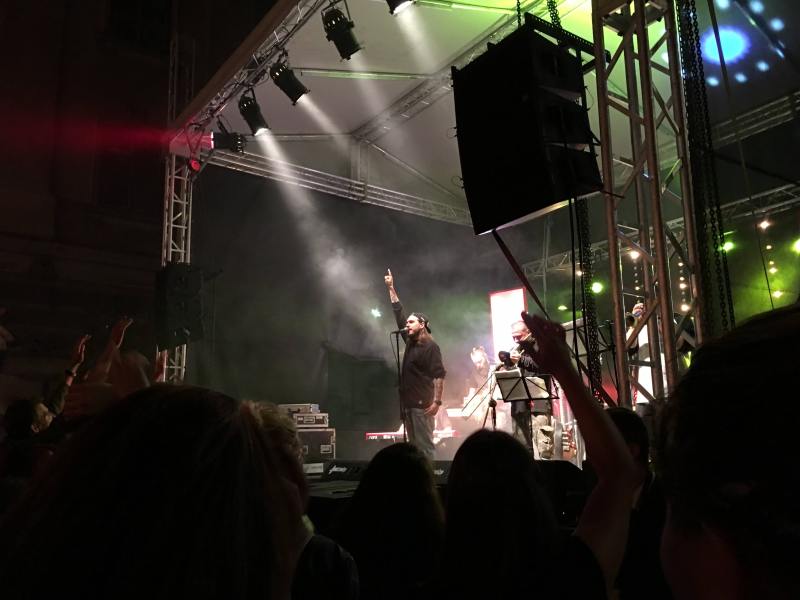
Miuosh (Katowice)
In Katowice, Miuosh started building his empire with Fandango Records, releasing celebrated albums like Prosto przed siebie and Piąta strona świata.
Miuosh was one of the first hip hop artists I discovered when moving to Poland in 2012 and he’s still my most streamed artist on my Polish Spotify account.
Although my Polish teacher was right when she said “isn’t Miuosh a bit advanced for you?”, I listened to a whole bunch of his albums to death. I loved the big beats, intriguing samples (from King Floyd to Aleksander Rybak), and glorious collaborations. And even if I missed out on parts of the lyrics, I definitely picked up lots of words and phrases.
O.S.T.R. (Łódź)
O.S.T.R. is a classically trained violinist who released his first rap album in 2001. Since then, he’s been (and still is!) remarkably productive with new albums every year.
A good starting point is the catchy track “Tabasko”. Or maybe “Kochana Polska” (Dear Poland) and “Wychowani w Polsce” (Raised in Poland) for an idea of what it was like growing up in Poland in the 1990s – told with equal parts affection, pride, and social criticism.
Fun fact about O.S.T.R.: The name is derived from his surname Ostrowski. He’s also known as “Ostry”, which means “spicy” or “sharp”.
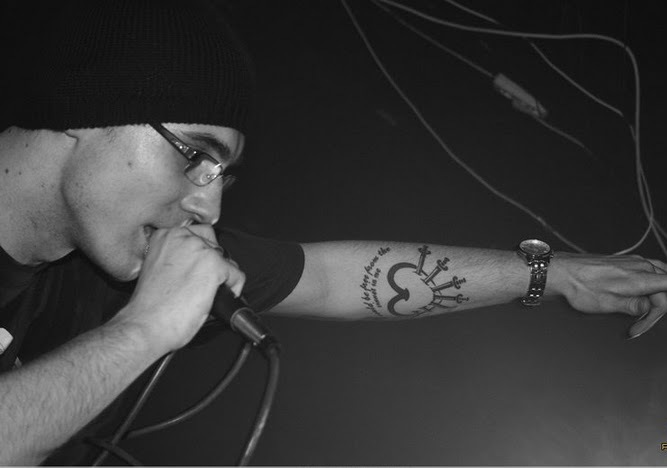
Pezet (Warsaw)
Pezet is another top storyteller with meaningful lyrics that offer a glimpse into the streets and backyards of Poland. Like O.S.T.R., he’s still hugely productive and tremendously popular with both critics and the public.
Two tracks to start with would be “Co mam powiedzieć” (What I have to say) and “Z Polski” (From Poland).
Enter the Polish rapper ladies
The 2000s was the era where women began claiming space, often expanding the scene to related subgenres like R&B.
In 2003, the talented sisters Natalia and Paulina Przybysz formed Sistars and released the groundbreaking R&B album Siła sióstr. While they didn’t rap, they released the track “Zeszyt rymów” with rapper Tede and came to play a huge role for Poland’s early female rappers.
WdoWa (Warsaw)
One of the first women to pick up the mic was WdoWa. Her debut album Braggacadabra in 2005 was a big deal that also paved the way for other lady rappers. In an industry that often defaults to showcasing women for their looks only, WdoWa stood out as being as talented as she is good-looking.
In 2007, she gained a wider audience by recording “Niewgrzeczna” with Pezet, for his album Muzyka Rozrywka.
I can also recommend the 2022 album Historia jednej miłości (The story of one love), which follows two people as they meet, date, and fall in love before the relationship becomes routine, goes through betrayal, and finally breaks apart.
The 2010s: Streaming and genre cross-over projects
By the 2010s, the internet and streaming had decentralized the music industry, leading to the rise of new initiatives and stars.
Miuosh’s collaborations
After several classic rap albums where he focused on identity in general and his relation to Katowice in particular, Miuosh went on to redefine the genre’s limits. In 2018, he sold out arenas together with The National Radio Symphony Orchestra (NOSPR), conducted by JIMEK and produced by Smolik. This was a true cross-genre project with lots of non-rapping guests, including Nosowska, Natalia Grosiak, and Piotr Rogucki.
In 2021, he started a new project called Pieśni Współczesne, blending rap with traditional Polish folk music.
More cross-genre projects are in the making: In the summer of 2026, he is touring with the folk-rock group Zakopower.
Taco Hemingway (Warsaw)
In Warsaw, Taco Hemingway started delivering beats with sharp and witty lyrics like there’s no tomorrow. He’s a gifted storyteller rapping about everyday life in Warsaw and Poland.
I discovered him through the earworm “Następna stacja” (The next station), which takes place along the M1 metro line in Warsaw. Going home from a party with a bad hangover, he shares his reflections on city life at each stop.
I still love that tune, but there’s a lot more to dig into with Mr Hemingway. Expect sharp observations and surprising metaphors, like when he compares Warsaw and the capital of North Korea in the track “Niedziela”. Harsh 😄
Fun fact about Taco Hemingway: He was born in Egypt and grew up in China before moving to Poland in 1996. He’s also lived in London and released some music in English.
Ryfa Ri (Szczecin/Warsaw)
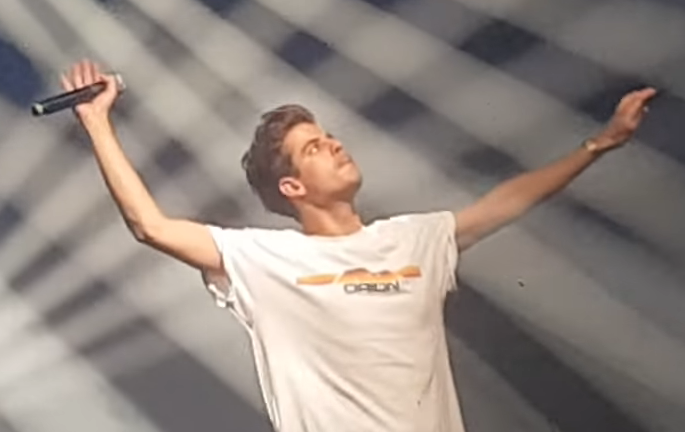
The force that is Ryfa Ri appeared and proved herself to be an excellent raperka and hip hop dancer. Her debut album Puzzle came out in 2013 and the brilliant Miejskie Stery (created together with Pekro and DJ Gram) followed two years later.
I haven’t found loads of information about her, but based on Miejskie Stery, I think she holds up as a Polish version of Lauryn Hill.
Rena (Szczecin)
Another strong female voice on the Polish rap scene. I can very much recommend her albums Uliczna Psychologia (2013) and Złoty Środek (2017).
Like many other Polish rap artists, she blends elements of electronic music and soul, but without ever compromising her identity as a rapper. In an era where commercialism started to take over and image became more important, Rena stands out as the real thing.
The 2020s: Influencers for a new generation
In the last 10 years or so, Polish hip hop has grown into a multi-million-dollar industry that feels very far from its roots. Poland has developed into a prosperous market economy, and naturally popular music is evolving too.
The social commentary hasn’t disappeared completely, but the focus has most definitely shifted. The borders between hip hop, R&B, dance, and pop have become increasingly blurry. Common themes include lifestyle, hedonism and fame; substance use and abuse; relations, social media and mental health. Image plays a bigger role.
Less authentic? Or does it simply reflect a different society? I’m not sure. Of course today’s rappers have different challenges and dreams from rappers of previous generations – but I still feel that some recent acts are a bit too… fabricated. Maybe I’m just a different generation 😉
In any case, let’s finish this article with some of the biggest names in Poland’s contemporary hip hop scene. I’ll start with WRR, as they had a lot to say about the state of hip hop and rap.
WRR
WRR is a female supergroup consisting of my three favourite lady rappers: WdoWa, Ryfa Ri, and Rena. Their album Wyłącz to G**no (Turn off that S**t) from 2021 can be seen as a contribution to the discussion around what counts as real hip hop and rap.
The track “Jak zostać raperką” (How to become a [female] rapper) is especially poignant and concludes that there are no rules you have to follow to be a rapper – as long as you have rapping skills and don’t lose track of who you are. As the track puts it: “A do tego skill, bądź sobą” (Besides that skill, be yourself).
Young Leosia (Szczecin)
One of the biggest contemporary acts is Young Leosia, who started as a DJ and sound engineer.
Young Leosia’s music belongs in a nightclub rather than on the streets, and some people have questioned whether she should be considered a rap artist. Others see her simply as a reflection of an evolving society and music industry. Regardless of people’s opinions, she’s undoubtedly had a massive influence on a younger generation of Poles.
And I wouldn’t see her as “fabricated”. In 2023, she launched the record label Baila Ella Records together with Bambi, who has become one of the most commercially successful female rappers in Poland. Way to go!
Bambi (Poznań)
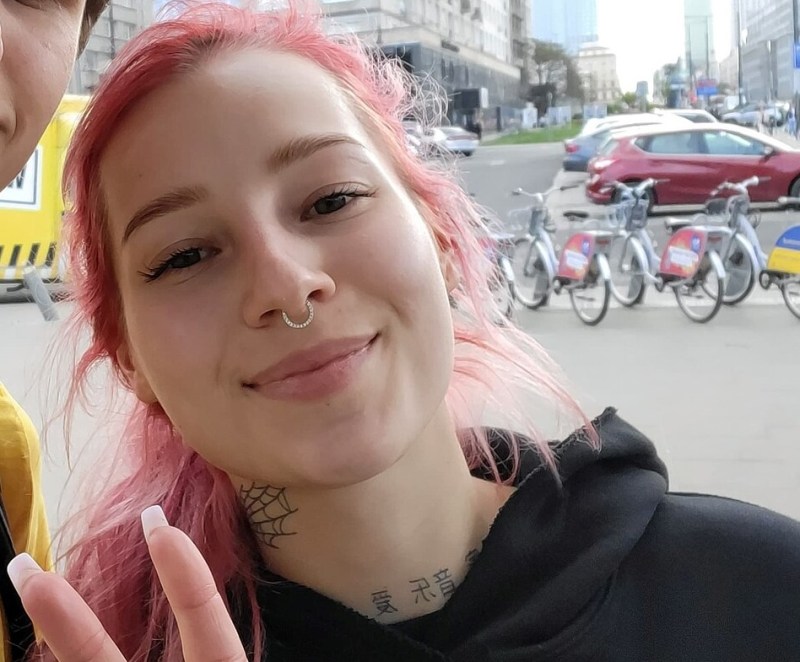
Blending rap with club music and melodic vocals, Bambi was the most-streamed female artist in Poland in 2024 (source: Spotify).
Her album Trap or Die was also successful, earning 13th place on the list of the most-streamed albums in Poland in 2025 (source: OLIS).
Sobel (Świdnica)
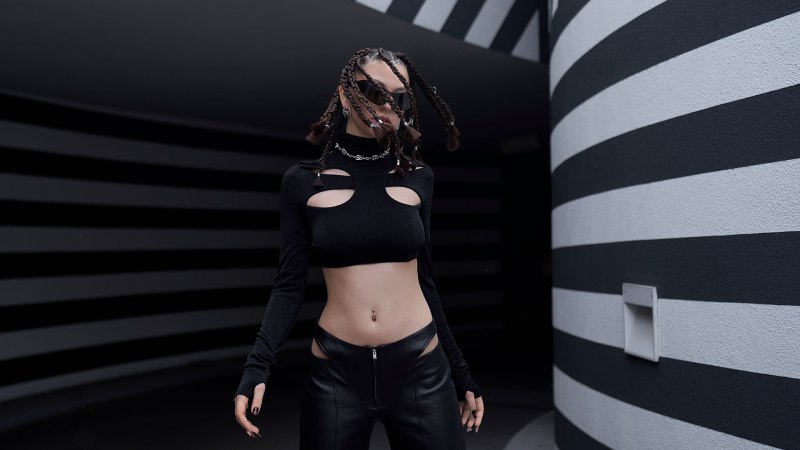
Sobel’s soulful voice has been topping the streaming charts since his debut in 2021. Like several contemporary artists, he moves in and out of rap and melodic pop. And like many others of his generation, he doesn’t seem very bothered about the comments that he’s not a *real* rap artist.
As he said with a shrug in an interview, “I got nominated for a hip hop award, although 5 out of 15 songs on the album are definitely not hip hop” (source: All that rap, a series available on Netflix). Not his fault!
The album Napisz jak będziesz (Write when you’re ready) was the most-streamed Polish album in 2025 (source: OLIS), so that’s a good place to start if you want to check out his music.
Mata (Wrocław/Warsaw)
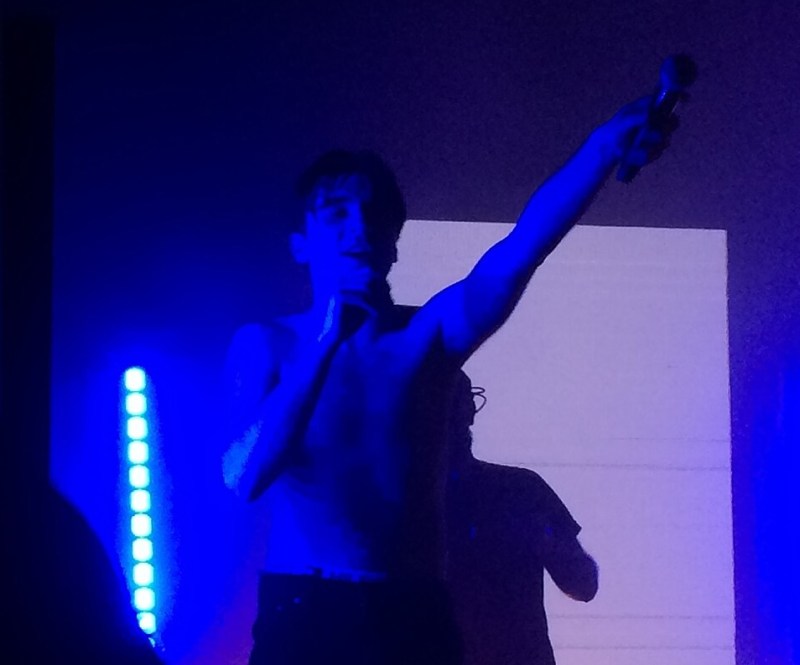
I first heard of Mata when his album Kamikaze topped the charts in 2024, and I have to admit that I didn’t quite get the hype.
Since then, I’ve realised that there’s more to him than tracks about parties, beaches and cocktails. The 2020 album 100 dni do matury (100 days until the final exams), for example, feels like a more substantial commentary on life in today’s Poland.
The latest album #MATA2040 is also great – from the initial Chopin sample to the track “Będę prezydentem :)” (emoticon included in the title track) and the single with Maryla Rodowicz (“To tylko wiosna” – It’s only spring). Heavier beats, smart production – on the whole, a solid album.
Fun fact about Mata: He is the son of the famous law professor Marcin Matczak, who often features in contemporary political debates on Polish TV and various YouTube channels.
What are your favourite Polish rappers?
I had to be selective when writing this article or else I would still be working on it. Let me know who *your* favourite rappers are in the comments section below!
Sources
My main sources for this article:
- All that rap – Netflix series about Polish hip hop
- Rap Story podcast (YouTube)
- The best of early Polish hip hop 1995-2002 (Culture.pl)
- Rhythm + Flow Poland – talent show on Netflix
- Spotify’s artist descriptions
- Wikipedia.pl


Leave a comment