Image generated by DALL-E
Polish is hard…
Yes, Polish is a tough nut to crack. The spelling is wild, the pronunciation’s a puzzle, and the grammar…? Don’t even mention it 😅
If you’re not used to Slavic languages, it feels like you have to learn some words 7 times to cover the different grammar cases. And for Germanic speakers like me, well – there’s hardly any overlap with Polish vocabulary.
…so how can we learn?
Most of us are not linguistic geniuses, so we need a long-term approach and methods that keep us entertained along the way.
Here are my favourite resources from the last 10 years. Everyone’s different though, so take what works for you and skip the rest! And if you have any more tips, I’d love to hear about them in the comments section below.
PS. I’m not affiliated with or paid by anyone or anything mentioned below. I’m just sharing what works for me.
Quick links
Listening skills
Understanding spoken Polish is what I struggle with the most. I can make my way through newspaper articles, but if I turn on the news on TV, everything turns into a mush. At the moment I’m putting most of my efforts into listening comprehension.
1. Hear what Piotr has to say
I came across “Learn Real Polish” by Piotr many years ago, when I was still fairly new in Poland. His courses and podcast were a complete game-changer. I started with the 365 daily stories course, which gives you one simple short story to practice every day for a whole year.
A refreshing approach that avoids the death-by-grammar trap.
I’ve also enjoyed his VIP programme from time to time. And check out his podcast too!
2. Watch Easy Polish on YouTube
The Easy Polish YouTube channel is fantastic, although I can’t say I find it particularly easy 😆 Even the Slow Polish episodes were challenging in the beginning.
Still, I highly recommend it. You get short, insightful videos about Polish language and culture, spoken spontaneously by people on the street. I tend to watch each episode three times. First, I listen while reading the subtitles. Then I start over and stop after every long sentence to note any new words. Finally, I just listen without reading the subs or taking notes.
You can also join their Patreon and get access to additional training materials. I haven’t tried this myself but maybe I will, when the time is right.
3. Play Polish music
When I started learning Polish, I thought hip hop would be an excellent way to get into the lingo. I soon discovered that Poland is full of amazing rappers, but I also realised that most of the lyrics were way to hard for me. But funnily enough, I really enjoyed the music anyway.
Even when I only got a few words or phrases from a whole song, I still liked listening to it. Polish music, not just hip hop but pretty much anything, is a big part of my learning process. It’s super helpful to nail the pronunciation of key words and to remember specific phrases forever.
If you agree, my blog is for you! Find a few songs you like on my Spotify or YouTube playlists and stick them on repeat.
Reading skills
As a typical introvert, I prefer to learn by reading and writing rather than talking. For me, reading is a way to pick up words in context and get a sense of the structure of the language. The question is what to read:
4. News articles, books or social media?
All of them!
News articles have two advantages: 1) they use modern language and 2) you get to know what’s going on in Poland. Unfortunately, they can be mega difficult to follow. I wish there was a site or podcast with simplified Polish news, but I haven’t found one that works for me yet. If you know any, please comment below!
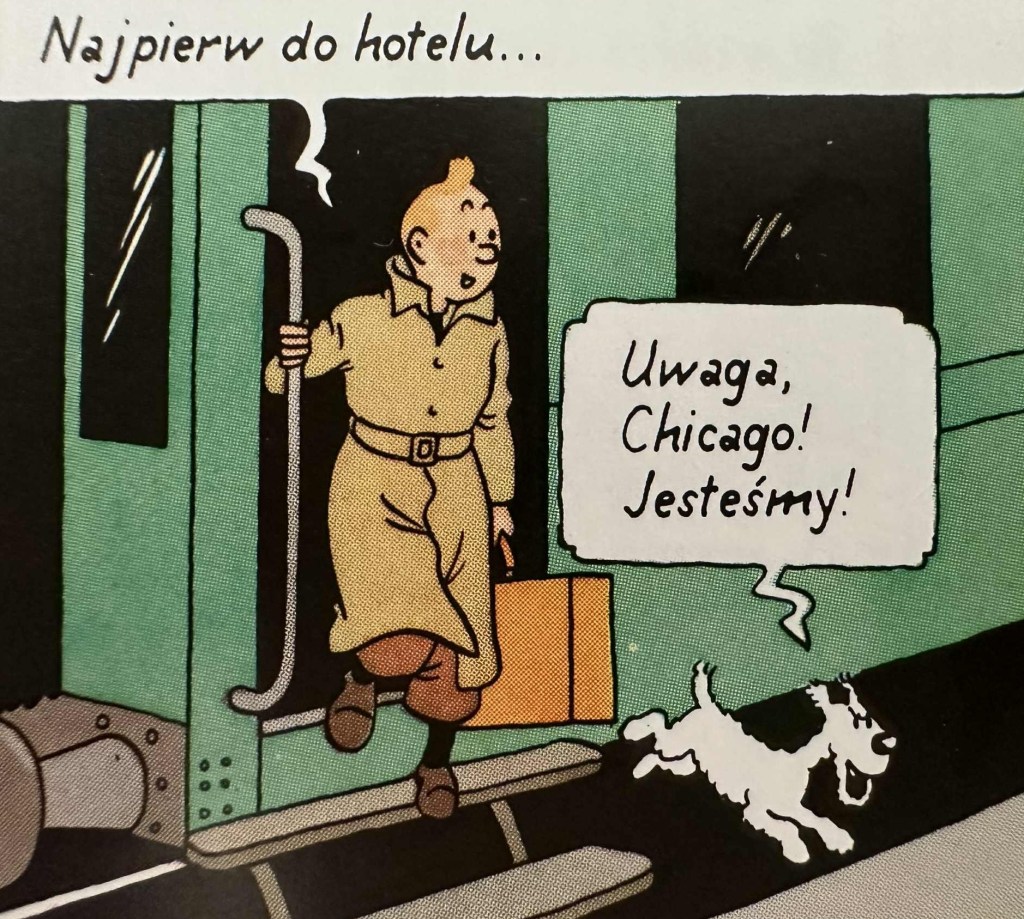
If you’re a beginner, you may want to start with text books that have been written specifically for Polish learners or kids’ adaptations of stories you’re already familiar with. I got myself a few Tintin albums, for example. Just keep in mind that some kids’ books have pretty strange language which is not always useful.
I can also warmly recommend the series ‘Czytamy w oryginale’, where simplified versions of classic literature are presented with English text on one side and Polish on the other.
Social media accounts can be great for a constant reminder of Polish in your feeds. I quite like Filmiki, które na pewno poprawią ci humor on Facebook, for example.
5. Follow Polish teachers on social media
Wherever you hang out online, there’s a gang of Polish teachers breaking down verbs and slang in 30-second chunks.
This is great for low-effort, high-reward learning. Most of us do way too much scrolling anyway – might as well learn a few new phrases while we’re at it.
Social media accounts are also a good way to find a teacher that might suit you. You’ll get an idea of their teaching methods and personality from their posts! Here are a few from Instagram to get you started – I’m sure there are many more:
Polski Daily
Gotta appreciate the effort Paulina puts into her social media posts! Always useful, often entertaining.
Pla pla Polish
Useful phrases, slang and cultural curiosities.
alexwoolly01
Alex is an English teacher living in Poland. As far as I know, he doesn’t teach Polish but he’s clearly picked up the best swear words and cursing phrases.
plynniepopolsko
Bite-sized grammar and mini exercises.
Polish with Dorota
Lots of good stuff for beginners.
Learn_Polish_easily
Phrases in slow Polish, although I think ‘easily’ is up for debate 😅
Studypolish.jj
Everyday phrases you don’t necessarily find in Polish textbooks.
Talking skills
6. Meet up with native speakers
Find someone who wants to learn your language and do a language swap. You can use apps like Tandem or HelloTalk, or check local Facebook groups and events.
The tricky thing is to find someone on a similar level as you. I used to do language swaps regularly with Polish university students who studied Swedish. Their Swedish was way above my Polish, and we often resorted to Swedish just to ease conversation. The strongest language usually takes over 🤷♀️
7. Get a private teacher or join a course
Lessons with a qualified teacher can make a huge difference. They’ll notice mistakes you don’t know you’re making and give you the push to keep going.Search Google for local options or try an online teacher through a platform like Preply or italkie. Or contact one of the Polish teachers you follow on social media directly!
Writing skills and vocabulary
I’m kind of neglecting practising writing at the moment, but have two writing-related tips to share:
8. Tell ChatGPT to ask you questions
If you have a paid (PLUS) account in ChatGPT, you can set up a scheduled task, asking it (him? her? they?) to send you questions in Polish at set times.
I’ve instructed mine to ask me a random question every morning and to keep the conversation going until I write ‘Dziękuję i do jutra’. My instructions also say that it has to keep the conversation at a simple level (B1-B2) and that it can correct my mistakes and suggest different ways to say the same thing.
I haven’t done this for long, but it seems to work well.
If you don’t have a paid subscription, you can set up a project and add instructions for your conversations. The only difference is that you won’t receive the questions at set times.
9. Make your own dictionary
Avoid the trap of learning vocabulary you’ll never use. When I come across new words that stop me from understanding, I stick it in a language app. My personal dictionary currently has 2,593 flashcards. The obvious benefit is that entry is based on words I actually want to use – things I’d heard, seen, or needed in real life.
Great to practice during dead time like when I’m on the bus.
I use Anki app for this and am super happy with it, but other language apps may have a similar feature.
What about you, how do you learn Polish?


Leave a comment